Do you — or someone you care about — have an unhealthy relationship with food that is harming your health, your career and your closest relationships?
Are drugs and alcohol part of the picture, too?
If you answered “yes” to both questions, it might help you to know that countless other people are walking the same road.
Research shows that a large share of people with eating disorders also use alcohol, drugs or other substances – often to cope with the pain, confusion and guilt they feel every day.
Even though thousands of people are caught in this pattern, it’s been nearly impossible to find effective care for both issues at the same time. Until now.
We are proud to announce the opening of our new specialty unit, The Institute for Eating Disorders and Addiction at SunCloud Health, a new residential care center near Chicago where adults living with eating and addiction issues can find the holistic treatment they need.
Video: Redefining Residential Recovery Through Compassion and Clinical Excellence
Led by Kim Dennis MD, CEDS, one of the nation’s leading psychiatrists, our residential program offers a safe, supportive environment for individuals facing complex co-occurring mental health, eating disorder, and addiction challenges, guided by expert psychiatric care and a holistic path to healing.
Meet Dr. Kim, a recognized expert – and a survivor
For Dr. Kim Dennis, the desire to create an all-new center for eating disorders and addiction is deeply personal.
“I survived the deadly trifecta of disordered eating, addiction and trauma,” she explains. “And throughout my career, I’ve never understood why addiction treatment happens on one side of the universe and eating disorder treatment lives on the other side.”
People with addiction issues are often turned away from treatment centers devoted to eating disorders, Dr. Kim says. “The question is why – because this ignores the real-life struggles so many of us face.”
Nearly 50% of all people with eating disorders have substance use issues, Dr. Kim confirms. And 30% to 40% of people diagnosed with addiction also experience disordered eating.
No two people are exactly alike, she emphasizes. “If you meet the diagnostic criteria for anorexia, bulimia or binge eating, this doesn’t automatically mean you have the same illness as someone else. You may have a different body phenotype from others with a similar diagnosis. You might even be suffering from food addiction, depression, PTSD or another mental health condition.”
A clear sense of the nuanced, integrated care that people actually need has inspired Dr. Kim to create a welcoming residential space that sees the whole individual.
“I have a real love and passion for these patients,” she says. “After more than 20 years, we are bringing together the resources they’ve been searching for.”
Video: Dr. Kim shares her vision for SunCloud Health’s new residential treatment center
The Institute for Eating Disorders and Addiction at SunCloud Health is SunCloud’s new residential treatment center that specializes in treating co-occurring eating disorders with addiction. This new unit is led by Kim Dennis MD, CEDS.
Stats on the Increased Mortality Rates on Eating Disorders and Addiction
- Studies show eating disorders are associated with high mortality rates, with anorexia nervosa being the second most lethal psychiatric disorder, surpassed by only substance use disorders. Although, studies have been infrequent on the mortality from the combination of eating disorders and addiction. New research shows the combined condition are much more lethal than the eating disorder alone. Some of the key findings of this study are:
- In a sample of 20,759 patients with eating disorders, 21.9% had a comorbid addiction.
- When compared to patients without an eating disorder:
- The mortality risk was 3.21 times higher in patients with anorexia nervosa without addiction.
- The risk was 11.28 times higher among patients with both anorexia nervosa and alcohol use disorder and/or cannabis use disorder.
- The risk was 22.34 times higher in patients with anorexia nervosa and a hard drug disorder (i.e., heroin/opioids, cocaine/stimulants, sedatives, or other psychoactive substances).
- For bulimia nervosa, the mortality risk was 5.86 times greater with a comorbid alcohol or cannabis use disorder and 11.43 greater for a comorbid hard drug use disorder.
- For an unspecified eating disorder, the risk was 10.86 times greater with a comorbid alcohol or cannabis use disorder, and 15.53 times greater with a hard drug use disorder.
As evidenced by this study, if a person presents with an eating disorder and co-occurring addiction, residential treatment has been shown to be an appropriate treatment choice to reduce morbidity and mortality.

Healing starts here.
Send a secure message to our care team.
Or call us anytime, day or night:
The value of residential treatment for eating disorders and addiction
Co-occurring problems with eating and addiction can be very complex. Addressing the root causes while treating the symptoms can be difficult, especially if you are getting care only a few days a week.
Integrated residential treatment gives you the chance to step away from the stress of everyday life so you can focus on getting well. Working with a dedicated team who have years of experience with eating disorders and addiction issues, you will learn more about yourself — and the unique triggers that drive your attitudes and actions around food, drugs, alcohol, or any other substance you can’t put down.
With dedicated, 24/7 support offered in a safe, comfortable setting, you can:
- Gain a clearer understanding of your personal story and how earlier life events may have laid the groundwork for your current struggles
- Explore new ways to respond to the urges that trigger unhealthy responses
- Recognize the impact that disordered eating and long-term addiction can have on your personal health
- Build new skills, habits and perspectives that transform the way you see yourself and help you move forward
Video: Why is an integrative treatment model essential to successfully treating patients?
Kim Dennis, MC, CEDS at SunCloud Health, discusses the vital role the integrative model (that she is pioneering at SunCloud) plays in the success of treating patients with co-occurring disorders and underlying trauma.
Common symptoms of eating disorders and addiction
At SunCloud Health, we’ve been helping people with complex, co-occurring disorders since 2016. Experience has shown us that integrated care — meaning a treatment plan that works with the strengths, challenges, and needs of the whole person — can open the door to lasting recovery.
If you have been diagnosed with anorexia, bulimia, binge eating or another eating disorder, you may have symptoms like these:
- Volatile or fluctuating moods
- Constant need to exercise and stay physically active
- Eating way too little to keep your body healthy
- Eating way too much, then making yourself vomit (purging)
- Thinking constantly about what you eat
- Obsessive search for food and nutrition facts
- Painful emotions while near food or while eating
- Frequent weight fluctuations
- Sleep problems: too much or too little rest
Your addiction struggles may cause symptoms such as:
- A strong urge to drink or use drugs regularly, even several times daily
- Needing more and more to feel the same effects
- Obsession with maintaining your supply
- Spending money you don’t have to buy alcohol, drugs or other substances
- Lying to friends, family and work colleagues about your habit
- Arguing with others or denying that anything’s wrong
- Missing work or falling behind on important deadlines
- Breaking the law to support your habit (for example, stealing)
- Avoiding certain people to hide what’s happening
- Skipping family get-togethers, sporting events and other social activities
- Spending almost all your time getting the substance, using it or recovering from it
- Finding that you can’t stop, no matter how hard you try
Don’t wait to get the help you need.

Mental health issues that might complicate your struggles
People who live with disordered eating and addiction issues often have related mental health conditions that have gone untreated — possibly for years. The SunCloud Health team will work with you to recognize the sign and symptoms of conditions such as:
- Anxiety
- Depression
- Bipolar disorder (formerly known as manic depression)
- Borderline personality disorder
- Obsessive-compulsive disorder (OCD)
Any mental health issues you are facing may have developed after eating disorders or addictions have begun to shake the foundations of your life. Or they may have been present even before food, drugs, alcohol and other substances became a a source of struggle for you.
Thinking about these conditions as part of a larger picture can be helpful. It often reveals a clear link between past and present struggles that can be successfully addressed in residential treatment.
Healing starts here.
What to expect in residential treatment
Here are some forms of treatment that the SunCloud Health care team may recommend. Every decision will be made with full transparency, placing you at the center of your health care plan. Your life story, your specific symptoms and your unique needs will determine what combination of treatments may be right for you. Your care plan may include:
- Expressive and experiential therapy
- Skills-based therapy such as DBT, ACT and CBT
12-step recovery programs and facilitation - Trans-cranial magnetic stimulation (TMS)
- Group sessions teaching healthy interpersonal and relationship management
- Education about your co-occurring disorders and their effect on you
- Courses on healthy eating and nutrition that empower you with new skills
- Family therapy, including family participation if appropriate
- Body image therapy combined with yoga and other helpful practices
Patient Satisfaction Matters
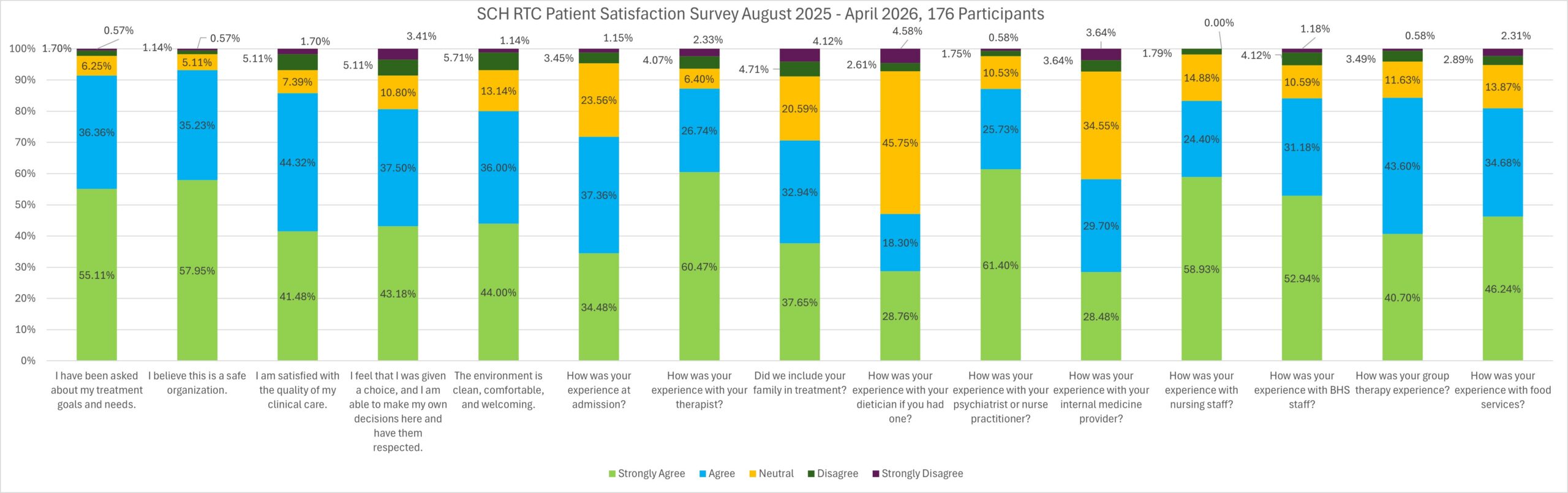
We believe that there is a direct correlation between our patients’ experience when in treatment and quality of care.
We listen to our patients.
We care about their treatment experience.
We measure their experience and we use this data to improve in areas where we can.
SCH RTC Patient Satisfaction Survey August 2025 – April 2026, 176 Participants
Video: Considering Treatment at SunCloud Health?
Dr. Sita shares what patients can expect.
Get your life back.
Send a secure message to our care team.
Or call us anytime, day or night:

Why you should NOT wait to get help
Without effective care for addiction and disordered eating, you are risking your health, your happiness and ultimately, your life. You are more likely than other people to endure:
- Loss of friends, close family relationships and community ties
- Job loss, endangering your health insurance and retirement savings
- Divorce or separation
- Jail or prison time
- Estrangement from your children
- Suicidal thoughts and actions
- Early death from damage to year heart, liver, brain and other body systems
It doesn’t have to be this way. At our new specialty unit (The Institute for Eating Disorders and Addiction at SunCloud Health), we are ready to help you regain control of your life. But only you can take the first step.
In 2024:
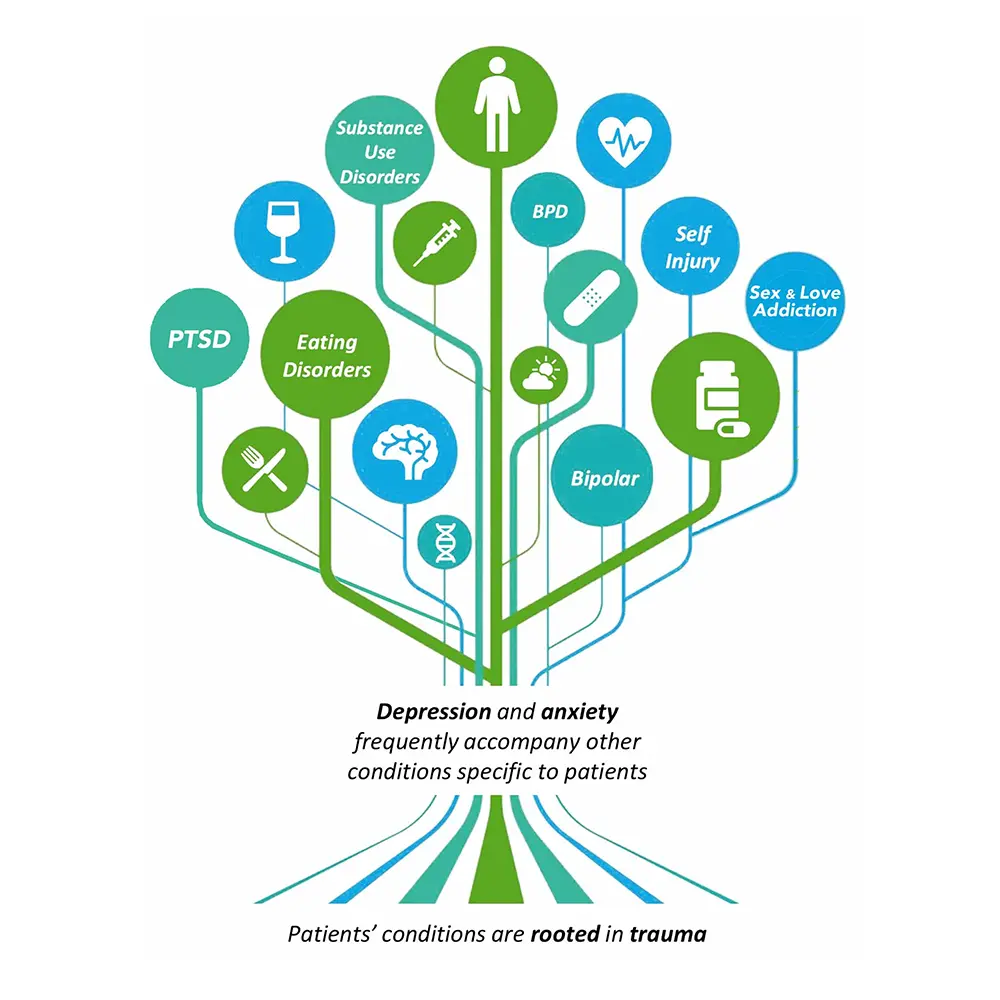
- 26% of all SunCloud patients had a dual diagnosis of an eating disorder (ED) and a substance use disorder (SUD)
- 44% of patients had a trauma and substance use disorder (SUD) diagnosis
- 26% of patients had a trauma and eating disorder (ED) diagnosis
- 90% of patients were diagnosed with 3 or more diagnoses
In-network with most major carriers, including:



Reach out now.
Explaining SunCloud’s Integrated ModelWhy is an integrated treatment model essential to successfully treating patients?
Dr. Kim Dennis, Co-Founder and Medical Director at SunCloud Health, discusses the vital role the integrated model (that she is pioneering at SunCloud Health) plays in the success of treating patients with co-occurring disorders and underlying trauma. How does SunCloud create an authentic culture of patient support?