
Protecting Your Recovery from Summer Body Image Pressure
Learn strategies to manage summer body image pressure and maintain your recovery by understanding seasonal triggers and emotional challenges.

Learn strategies to manage summer body image pressure and maintain your recovery by understanding seasonal triggers and emotional challenges.

Learn how a partial hospitalization program for eating disorder and substance use recovery supports healing while balancing daily life and responsibilities.

Completing treatment is a significant milestone, but recovery doesn’t end when a program does. For many people, the transition from treatment back into everyday life

Learn how to identify the appropriate care level for managing eating disorders and substance use disorders with a compassionate, integrated approach.

In this blog, we’ll explore why maintaining mental health support during the summer months is essential for adolescents. You’ll learn how changes in routine can impact emotional well-being, why structure still matters even when school is out, and how experiential activities can enhance growth and engagement.

Explore how family-based therapy for adolescent eating disorders boosts remission rates and why early intervention is key to lasting recovery.

Body image struggles are often associated with girls and women, but many boys and men are also impacted. Because of stigma and cultural expectations, their struggles are less likely to be recognized, discussed, or treated.
In recent years, more men have started sharing their experiences publicly. Singer-songwriter Noah Kahan has spoken openly about his own struggles with body dysmorphia. Through his music and documentary, he describes the exhausting cycle of waking up feeling disconnected from his body and trapped in negative self-perception, even when others see him as successful and admired.
Stories like his remind us that body dysmorphia does not discriminate by gender, age, occupation, or any other attribute.

In this blog, we’ll explore how topic-specific outpatient groups can support adolescents’ mental health and development. You’ll learn how group therapy fosters connection, reduces isolation, and helps teens build practical skills through shared experiences.
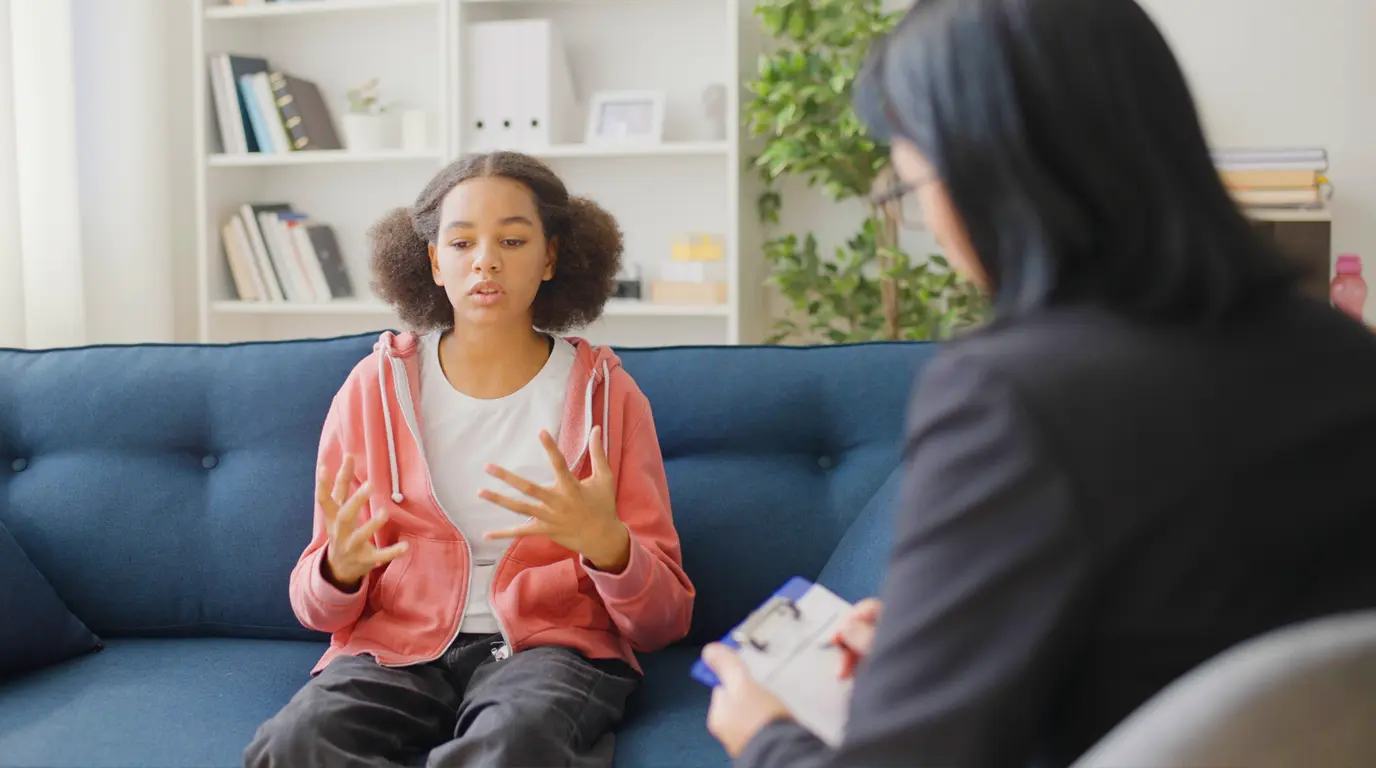
Learn practical strategies to gently encourage your child to accept mental health support while respecting their feelings and ensuring their well-being.
Dr. Christopher Womack joins SunCloud as our Medical Director, Child and Adolescent Psychiatry.
Dr. Womack is board certified in Adult as well as Child and Adolescent Psychiatry, attending the University of Chicago Pritzker School of Medicine. Adult psychiatry residency and child fellowship training were completed at the University of Chicago Medical Center.
Dr. Womack’s treatment philosophy hinges on strength based, evidence informed care, where collaboration is central to guiding individualized treatment. He has experience caring for children and teens from varied backgrounds, appreciating the importance of how identity can inform treatment.
Favorite pastimes are cooking new recipes and exploring Chicago’s rich cultural diversity through its neighborhood and fine dining experiences.