Our Mental Health and Addiction Treatment Programs

Our outpatient and residential treatment programs include individual, family, and group therapy, IOP, and PHP

Our treatment programs include outpatient individual, family, and group therapy. For more intensive treatment, we also offer Intensive Outpatient Program (IOP) and Partial Hospitalization (PHP), as well as residential treatment programs for adults.

We are guided by a truly integrative approach to treatment programs in every way. Our care delivery model is centered around treating both the symptoms of these deadly diseases and the underlying causes of them. By using a coordinated and individualized approach based on each person’s specific needs, our treatment programs and care plans address the bio-psycho-social and spiritual domains of these disease sets.

We realize that trauma lies at the heart of many of the reasons are patients are engaging in self destructive behaviors, and we have a heavy emphasis on treating that trauma. We involve families in the treatment of patients whenever possible, and we also have specific outpatient treatment programs just for families.

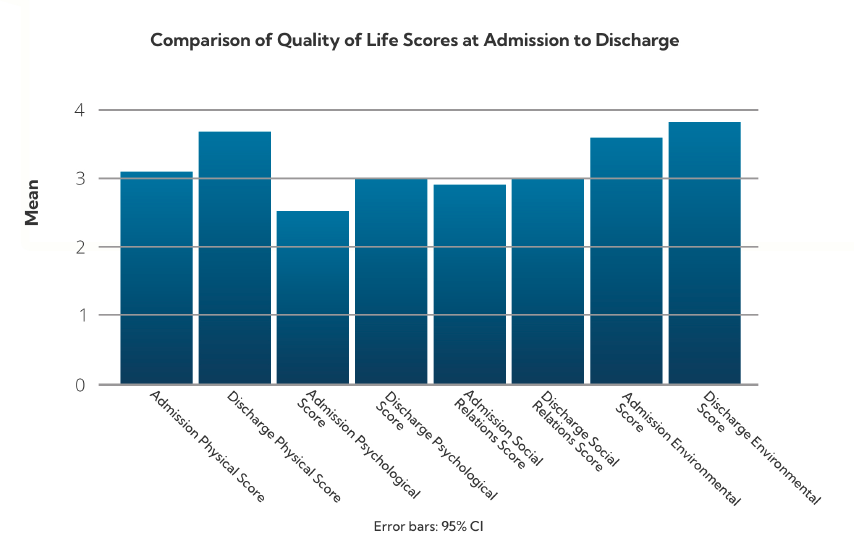
Discharge Chart

We provide integrated care because our patients need it. In 2024, of the 559 patients admitted to all of our treatment programs:

  • 26% of all SunCloud patients had a dual diagnosis of an eating disorder (ED) and a substance use disorder (SUD)
  • 44% of patients had a trauma and substance use disorder (SUD) diagnosis
  • 26% of patients had a trauma and eating disorder (ED) diagnosis
  • 90% of patients were diagnosed with 3 or more diagnoses
  • 65% of patients had a diagnosis of a trauma and stressor-related disorder
  • 73% of patients had a diagnosis of depression
  • 32% of patients had a diagnosis of post-traumatic stress disorder (PTSD)
  • 44% of patients had a trauma and substance use disorder (SUD) diagnosis
  • 24% of patients had an eating disorder (ED), mood disorder, and trauma diagnosis
  • 39% of patients had a substance use disorder (SUD), mood disorder, and trauma diagnosis
  • 26% of patients identify as BIPOC
  • 42% of patients identify as LGBTQ+

Video: THE LEVELS OF CARE AT SUNCLOUD HEALTH

Dr. Dennis provides an overview of the levels of care and treatment programs provided at SunCloud Health.

Video: Considering Treatment at SunCloud Health?

Dr. Sita shares what patients can expect.

Supporting Recovery with Evidence Based Treatment Programs

We use evidenced based treatment that has proven through data, trials and experience to be effective in aiding you in recovery. This includes 12-step facilitation, ACT, DBT, Exposure and Response Prevention (ERP), DBT-PE, Cognitive Processing Therapy, TMS Therapy, and esketamine (Spravato). 

We also offer treatment programs at the forefront of clinical interest, including Somatic Experiencing, expressive therapies, family education, and mindfulness-based relapse prevention. Behavioral approaches are held contextually, and services are circled around the patient to offer a balance of skills and process orientated therapies. We support the use of Medication Assisted Therapy (MAT) in specific clinical circumstances, and when used in the context of robust psycho-social-spiritual therapy.

Our team is committed to supporting the recovery efforts of anyone who is suffering with compulsive behaviors used to manage the effects of stress or trauma. Whether you have an addiction, anxiety, mood disorder, substance use disorder, an eating disorder, PTSD, or a personality disorder, our treatment programs can help.
Kimberly Dennis, MD, CEDS

Our integrative treatment program is designed to coordinate care across disorders, eliminating the need for patients to choose which diagnosis deserves priority.

Video: WHAT TO LOOK FOR IN TREATMENT FOR YOUR CHILD?

Dr. Alexander Chevalier, Medical Director, Child and Adolescent Psychiatry at SunCloud Health, gives parents helpful advice on what to look for when considering treatment centers their child.

At SunCloud we try to answer the real question as to why our patients are engaging in self destructive behaviors- Namely, “Why the pain?”… If we can help answer that question, we are then able to work on the underlying cause(s) of the disease. With this we can help stop not only the self destructive behavior but also lead our patients in to a life of freedom and long term recovery.

Video: WHAT QUESTIONS PARENTS SHOULD ASK A TREATMENT PROVIDER?

Dr. Alexander Chevalier, Medical Director of Child and Adolescent Psychiatry at SunCloud Health, details the questions parents should be asking when looking for a treatment provider.

Video: DOES IT MAKE SENSE TO PULL MY KID OUT OF SCHOOL FOR TREATMENT?

Hear from Dr. Chevalier on the balance school and extracurricular activities with treatment. In most cases, coursework is unaffected and can be improved while a student is out of school receiving treatment.

We believe in treating our patients and their families first and foremost as human beings, who courageously come to us in pain and often times in shame, seeking help and support. We want our patients to know there is hope and that you are not alone in your struggle.

Kim Dennis, MD, CEDS
Founder, SCH

Explaining SunCloud’s Integrated Model Why is an integrated treatment model essential to successfully treating patients?

Dr. Kim Dennis, Co-Founder and Medical Director at SunCloud Health, discusses the vital role the integrated model (that she is pioneering at SunCloud Health) plays in the success of treating patients with co-occurring disorders and underlying trauma. How does SunCloud create an authentic culture of patient support?

Elizabeth E. Sita, MD
Medical Director of Adult Services

Dr. Elizabeth E. Sita, MD, is a Board Certified psychiatrist specializing in the care of patients with eating disorders. She completed her undergraduate training at the University of Chicago and graduated with Highest Honors. She then earned her medical degree at Northwestern University Feinberg School of Medicine and was recognized with the Chairman’s Award for Excellence in Psychiatry. She subsequently completed residency with the Department of Psychiatry and Behavioral Sciences at McGaw Medical Center of Northwestern University, where she was elected Chief Resident and received the Resident Psychiatrist Leadership & Service Award.
Upon completing her training, Dr. Sita came to Ascension Alexian Brothers Behavioral Health Hospital, where she served as Assistant Medical Director of the Center for Eating Disorders and Director of Transcranial Magnetic Stimulation Services before transitioning to lead the new inpatient eating disorder unit as Medical Director of Eating Disorder Services at Ascension Saint Joseph Hospital – Chicago. In these roles, she has cared for a multitude of adolescents and adults struggling with anorexia nervosa, bulimia nervosa, binge eating disorder, and other eating disorders as well as severe, cooccurring mood, trauma, personality, and substance use disorders.
Dr. Sita has been recognized throughout her training and practice for a commitment to excellence in patient care and for her ability to engage patients in their most challenging moments. Her passions include the care of treatment-resistant eating and mood disorders as well as questions of medical capacity and end-of-life decision making.
She believes that, first and foremost, human connection is key to mental health and well-being and strives to share this philosophy in each and every patient encounter. She is excited to bring her expertise to SunCloud Health as the Medical Director of Adult Services!
 
VIDEO: Meet Elizabeth E. Sita, MD, Medical Director of Adult Services


 https://youtu.be/JbmELh2UGXE

Lacey Lemke, PsyD
Assistant Vice President of Clinical Services

Dr. Lacey Lemke (she/her) is a licensed clinical health psychologist with specialized expertise in the treatment of eating disorders and the practice of medical and health psychology. She completed her doctoral training in clinical psychology with a Primary Care emphasis at the Adler School of Professional Psychology. Dr. Lemke went on to complete both her predoctoral clinical internship and postdoctoral fellowship through Ascension Health, where she gained advanced training working with individuals experiencing eating disorders and self-injurious behaviors, as well as within pediatric subspecialty settings including endocrinology, neurology, and adolescent medicine.

Dr. Lemke is deeply committed to providing evidence-based, compassionate care and collaborates closely with interdisciplinary teams to ensure comprehensive treatment. Her professional mission is to support patients in achieving their fullest potential by guiding them to the most appropriate level of care and empowering them to make meaningful, sustainable progress toward improved health and well-being.