Interviewed by Kimberly Dennis, MD, CEDS Featured expert on addictions.
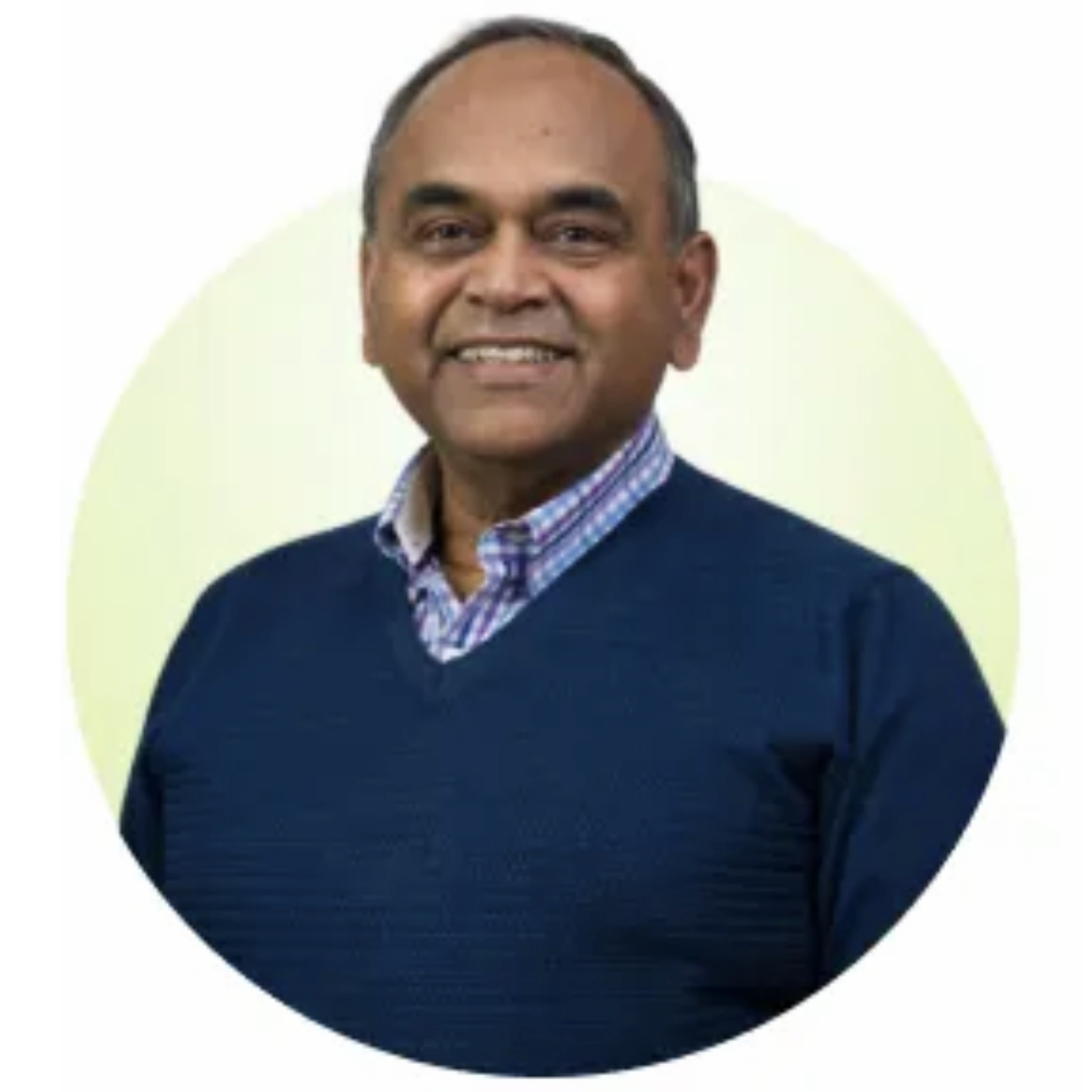
Dr. Raju Hajela
Q. How does the bio-psycho-social-spiritual model of addiction provide a more holistic perspective compared to traditional approaches?
A. Traditional approaches posit a social (trauma/poverty/permissiveness) or spiritual (moral/religious) deficits in an individual and/or society in relation to addiction. Recognizing Addiction as a disease of the brain highlights the biological (genetic) underpinnings and more complications, which become apparent in one’s behavior in the psycho-social-spiritual context. The spiritual is defined as more meaning and values based for an individual in their cultural context rather than religion. Adverse social factors are taken into account as aggravating factors. Both of these factors affect a person’s thinking (cognition) and feeling (affect), which then impact the individual’s behavior. This approach takes all aspects of an individual in context of various aspects of their lives to appreciate the expression of Addiction behaviorally as a dynamic rather than singular focus on just one or more addictive behavior(s).
Q. What are some significant limitations of the DSM-5 in capturing the full complexity of mental health and addiction, and how can clinicians address these gaps in practice?
A. DSM, even going back to DSMIII (1980), has taken an atheoretical behavioral approach in classifying addictive behaviors, with the emphasis largely being on substance use. Historically, the two substance use disorders were “substance abuse” and “substance dependence”. The pitch was to rule out substance dependence, which is considered analogous to addiction, in someone presenting with substance-related issues, as that is a more serious problem than substance abuse, which decades ago was abandoned by WHO/ICD in favor of “hazardous use” (episodic) or “harmful use” (continuous), if/when dependence criteria were not met, which largely highlight impairment in control. DSM 5 in 2013 combined to two disorders into one “Substance Use Disorder”, which has created a lot of confusion, such that most consider it as renaming of substance abuse, while not understanding the complexities of the disease of Addiction. Clinicians need to learn not just the terminology but the implications of focusing on behavior change (surface) vs holistic treatment and recovery that covers the biological, psychological, social and spiritual manifestations.
Q. What strategies can healthcare providers employ to ensure a comprehensive and unified clinical assessment for addiction and mental health issues within a patient-centered chronic disease framework?
A. Psychiatric and psychological evaluations that are DSM based classify all mental health problems as behavioral and diagnoses are made using behavioral checklists. Sadly, the diagnoses in DSM are not discrete as the same behaviors appear on different diagnostic checklists, such that often the diagnoses are more driven by the clinician bias a priori rather than taking a bio-psyco-social-spiritual approach that is patient-centered and recognizes the chronicity of mental health problems from their roots in childhood to what can be anticipated if change is not undertaken. A comprehensive and unified clinical assessment for addiction and mental health issues identifies if addiction is present or not, which then allows addressing of mental health complications. Generally, the mental health issues are harder to address when addiction in any form – mild, moderate or severe – exists, as by definition it creates cognitive and affective distortions such that individuals cannot see themselves clearly enough and/or cannot appreciate the complexities and severity of their problems.
Q. How can a patient-centered chronic disease framework improve outcomes for individuals struggling with addiction, and what role does interdisciplinary care play in this approach?
A. There is a tendency to approach Substance Use Disorders as a one off acute behavioral problem, so people focus on abstinence or controlling substance use with limited success usually or even if abstinence is achieved, other aspects of Addiction remain untreated, especially the D – diminished recognition of problems in one’s behavior and interpersonal relationships and E – dysfunctional emotional response that can drive people towards escaping with other behaviors and/or get diagnosed with other psychiatric disorders such as Bipolar, Borderline or ADHD. The chronic disease framework focuses on bio-psycho-social spiritual growth that is time unlimited and interdisciplinary care allows patients to access a variety of providers and services to suit their needs. Giving people choices also promotes and reinforces autonomy and responsibility in recovery.
Q. In what ways can integrating a spiritual component into addiction treatment enhance recovery outcomes, and how can providers respect diverse spiritual beliefs?
A. Spirituality can be explored usually through first asking about meaning, purpose and values a person holds dear in their life. Beliefs about who they are is important, in context of their relationship with others and the rest of the universe. It requires exploration of how someone defines oneself vs trying to live up to other people’s expectations, which is where religion often gets conflated with spirituality. People-pleasing and image-management are contrary to having one’s own identity and spiritual connection. Religion often requires conformity to church-defined doctrine. Providers need to be clear about who they are, be familiar with a variety of beliefs and be careful not to assume or impose. It becomes a great area for exploration and discussion to reinforce the therapeutic alliance in long term recovery.
Q. Please tell us more about your involvement in the work to create ASAMs definition of addiction.
A. I joined ASAM in 1988 and was involved in getting the Canadian Society of Addiction Medicine started in 1989 and the International Society of Addiction Medicine started in 1999. I have been in leadership positions in both. I got recruited to join the ASAM board in 2004 and through various discussions found myself heading the Definitions and Diagnostic Terminology Action Group (DDTAG). I had led the task of establishing the 1999 Canadian definition that stated, “Addiction is a primary, chronic disease characterized by impaired control over the use of substance(s) and/or behaviour(s).” that tried to bridge with DSMIV idea of substance dependence and was inclusive of all kinds of addictive behaviors that clinicians were familiar with, for example, food, sex, relationships, gambling, shopping, technology, exercise etc.
The DDTAG work began around 2007 and we built upon the Canadian definition with a lot of discussion in context of the neurobiological research, especially the work of Dr. Eliot Gardener and Dr. George Koob. Dr. Nora Volkow (NIDA) also provided input and review. We circulated the drafts extensively and polished the language until the ASAM board was satisfied. The short and long version are still archived on the ASAM website.
Q. What are some of the factors that led to the definition being updated in 2019 and how is the updated definition different than the original definition in 2011?
A. The factors that led to the development of 2019 definition were all political. DDTAG was disbanded in 2018. There were people who wanted spirituality taken out and wanted more alignment with DSM5 “substance use disorder”, which in short is to harken back to “substance abuse”. It was the public policy committee that hastily cobbled together a narrative that was approved despite objections of a lot of ASAM leadership and membership.
In the process of seeking some sort of realignment, they chose only two Cs – compulsion and continued use despite adverse consequences; ignored the critical Cs of impaired Control, which defines substance dependence, which WHO/ICD still maintains as a standard; and Craving (which is included in DSM5!). I resigned from ASAM in 2020. Many Addiction physicians ignore the 2019 “definition” because it is ideological and not based in science.
Explaining SunCloud’s Integrated Model Why is an integrated treatment model essential to successfully treating patients?
Dr. Kim Dennis, Co-Founder and Medical Director at SunCloud Health, discusses the vital role the integrated model (that she is pioneering at SunCloud Health) plays in the success of treating patients with co-occurring disorders and underlying trauma. How does SunCloud create an authentic culture of patient support?